
Galliano and Zara: Lessons in Narrative Strategy
FSW explores the Zara x Galliano collaboration as a lens into narrative strategy and the push me-pull you changing shape of fashion.


Insights
Fast fashion has increasingly adopted the narrative tools that once defined luxury, using storytelling, clear points of view, world-building, and immersive experiences to deepen engagement beyond product alone.
At the same time, luxury brands are fragmenting their identity, adopting faster product cycles, performance-driven content, and DTC-style marketing, often at the expense of narrative coherence and long-term differentiation.
In bringing in a designer like Galliano, Zara leans into this tension, embedding storytelling, point of view, and immersion into its business model by layering luxury’s narrative tools directly into its fast-fashion system.
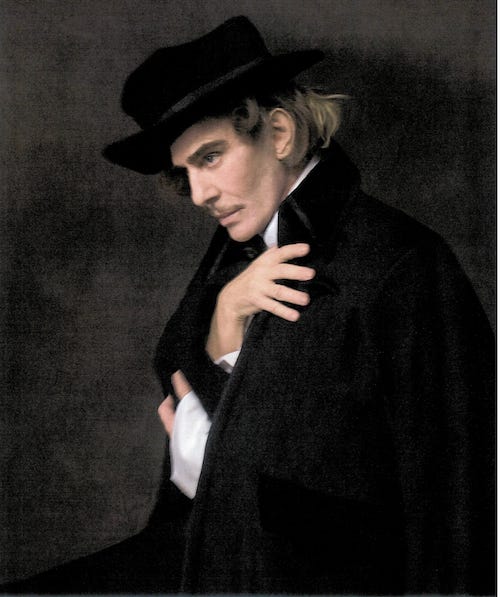
John Galliano has always approached fashion as something closer to narrative than product. His work is purposefully cinematic and provocative, unfolding through character, mood, and atmosphere until the clothes feel inseparable from the world around them. This narrative instinct has defined his career across houses. This is evident in the theatrical romanticism of Givenchy and the era-defining spectacle of Christian Dior to the more recent, deliberately constructed worlds of Maison Margiela (see our analysis of his creation of a Victorian underworld for Margiela’s SS2024 Artisanal collection). Across each of these, the through-line has remained consistent: fashion as narrative system rather than product output.
At a moment when much of the luxury industry is defined by speed, repetition, and constant visibility, Galliano’s work has continued to insist on depth. It creates space for thought, interpretation, and meaning. It asks the audience to engage rather than simply consume. Even as the pace of fashion has accelerated around him, Galliano’s approach has remained anchored in authorship.
Zara’s decision to bring fashion’s most narrative designer into its ecosystem is best understood in the context of narrative strategy and creative authorship. For the brand, this move is deliberate and savvy, and reflects how it is positioning itself within the broader shifts happening in fashion.
Fast fashion has increasingly adopted the narrative tools that once defined luxury: storytelling, a clear point of view, world-building, and immersive experience. At the same time, luxury brands are fragmenting their own identity, adopting faster product cycles, performance-driven content, and DTC-style marketing, often at the expense of narrative coherence. The result is a fashion industry where content is constant, but narrative differentiation and coherence feel increasingly rare.
Zara makes no attempt to resolve this tension, and, in fact, leans into it. The brand unabashedly remains a fast-fashion business built on speed and accessibility, but it is now deliberately layering in the same narrative tools that once set luxury apart. Bringing in a designer like Galliano signals a shift toward storytelling, point of view, and immersion as part of how the business operates, not just how it presents itself.
This is what makes the Zara x Galliano move effective. Zara is working within its fast-fashion model while drawing directly from luxury’s narrative playbook at a moment when the industry is moving away from it. Rather than choosing between speed and meaning, it is combining both and showing how narrative can function within a high-volume system without losing clarity or control.
Narrative, the Galliano Way
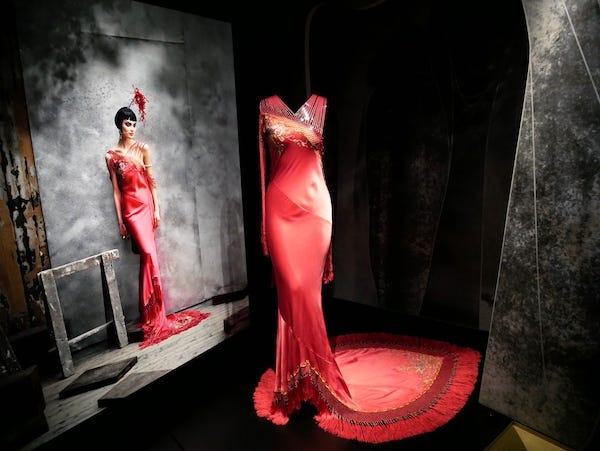
As a designer, what distinguishes Galliano is not simply his aesthetic, but how he approaches fashion itself. He does not start with product and build outward. He builds a world and creates the clothes that exist inside it. Image, casting, music, set, and movement work together so that the collection reads as a complete narrative universe rather than a series of individual looks. The effect is immersive. You are not just seeing the clothes. You are experiencing the narrative fabric that gives them meaning.
Galliano is Galliano no matter where he works and has adapted his creative perspective to very different houses. At Christian Dior, he brought us highly theatrical runway shows that pushed fashion toward spectacle, with history, fantasy, and character shaping how each collection was understood. His tenure ended in 2011 after antisemitic remarks, a moment that remains part of his legacy and continues to shape how his work is received.
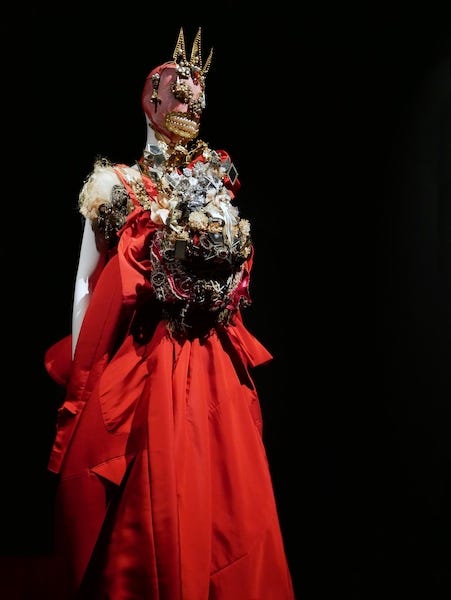
For better or worse, Galliano’s re-invention at Maison Margiela was a marvel, providing a platform into which he could play and sharpen his narrative world-building skills. At Margiela, his work slowed down and became more precise, with a stronger emphasis on atmosphere and construction, though the underlying approach did not change.
Galliano’s unmistakable narrative flair and his complicated legacy form part of what makes him such a polarizing figure in fashion. His work brings a clear point of view, and his presence carries a level of tension that cannot be separated from it.
For Zara, this is exactly why the collaboration works. The brand is focused on its bottom line to sell clothes and is not trying to explain or resolve the tension that Galliano brings, though it arguably leaves space for it. Bringing in a designer who builds meaning through context allows Zara to deepen its own narrative strategy and system without changing its business model, if you will. Instead of layering storytelling onto product, the brand can create an environment where product and narrative operate together.
As we have explored in an essay entitled “The Differentiation Economy”, this is where many luxury brands struggle to differentiate. Storytelling is often treated as a marketing layer, disconnected from commerce and customer experience, resulting in fragmented narratives across channels and a weakened brand identity. Zara takes a more restrained approach. It builds the context and lets meaning come through.
Narrative as System, Not Campaign
It is too early to assess how this collaboration will be expressed. What is already clear, however, is that Zara has built the kind of system that can support it.
This is most visible in its digital environment. The Zara app, in particular, functions less like a traditional e-commerce platform and more like a continuous experience. Editorial content, campaign imagery, and product are presented within the same flow. Navigation feels guided, intuitive, and visual rather than purely functional (a big improvement from its former approach that conflated navigation categories with taxonomy). In app, you move through collections, not just across product grids. The transition from inspiration to purchase is direct, but it does not feel abrupt.
Zara has been expanding this with more interactive formats. Its live shopping campaigns, including those featuring Kaia Gerber alongside Cindy Crawford, bring storytelling, personality, and product into a single in-app experience. Behind-the-scenes editorial, video content, and other interactive elements sit alongside product rather than pointing to it from elsewhere. The effect is cumulative. The user is not moving between content and commerce. They are experiencing both at once.
This matters because it changes how narrative operates. Zara builds story directly into the shopping experience, so content and commerce move together rather than separately. In luxury, those elements are often developed in parallel and do not fully connect, which can make the experience feel fragmented. Here, Zara’s advantage is structural, as it has built a system where narrative can scale.
Fast Fashion and Luxury Are Trading Playbooks
Another reason the Zara x Galliano collaboration is interesting is how it reflects where the industry is heading.
Fast fashion is no longer defined by speed alone. It is borrowing from luxury’s narrative playbook, using storytelling and point of view to hold attention in a saturated market. Luxury, on the other hand, is moving in the opposite direction. Growth pressures have pushed brands toward faster cycles, constant content, and performance-driven marketing, often at the expense of a coherent experience.
The result is a shift in corporate strategy. Fast fashion is building more depth, while luxury is increasing its output. The industry is starting to take on a “push me–pull you” shape, with fast fashion pulling toward narrative depth while luxury pushes toward speed and volume. The risk for luxury is not product quality, but brand differentiation and narrative clarity. The brand becomes harder to read as a single idea.
Zara sits directly within this shift. It is continuing to operate at scale, but is building more context around the product so story and shopping move together. The Galliano collaboration nicely fits into this approach, adding a stronger creative perspective to a system already designed to carry it. And the experience holds together even at scale.
What This Means in Practice
For decision-makers across fashion and luxury, the Zara x Galliano collaboration are offers some practical lessons in content and narrative strategy:
Narrative needs to be built into the system, not added as a campaign layer
Story and commerce need to operate together, not in parallel
A clear point of view is now expected, not optional
Experience matters as much as product in holding attention
Speed alone is no longer enough to differentiate
A Slower Layer Within a Fast System
Ultimately, while content volume and supply chain demands remain an operational reality, the fashion industry needs to move more towards narrative coherence. Not slow fashion per se, but fashion that knows how to hold attention. Zara is not resolving the shift. It is showing how to operate within it with greater precision, control, and restraint.
Zara is not stepping outside the system. It is working within it by building more context around how the brand is experienced, using content and storytelling as tools to build and deepen experience, meet consumers where they are, and guide them throughout their shopping journey. Their model remains fast and accessible, but it is structured in a way that allows for depth and immediate engagement, rather than being solely product focused.
Bringing in Galliano fits well with this strategic narrative approach. His work has always centered on building worlds where fashion extends beyond the garment itself. Within Zara’s system, this way of working does not disrupt the model. On the contrary, it reinforces it, giving shape to a high-volume environment that might otherwise feel forgettable.
As fashion evolves, brands that can align story, experience, and commerce will be better positioned to hold attention over time. Zara offers a solid example of what that looks like in practice.
Love this collaboration! ❤️ great share. Thank you for writing this piece. Cheers!